History of Spring Hill Farm
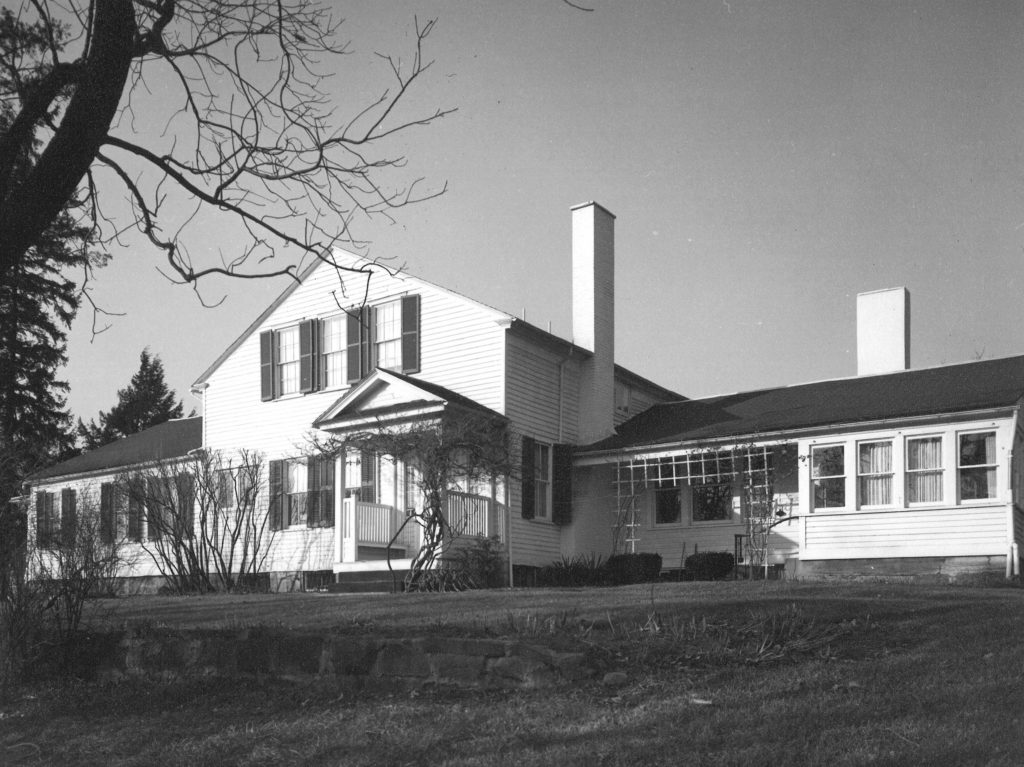
Spring Hill Farm was first settled by Thomas and Charity Rotch (pronounced Roach) in February of 1812. They had moved west to Ohio in November of 1811 upon the advice of Dr. Benjamin Rush of Philadelphia, Pennsylvania, and Dr. Eli Todd of Hartford, Connecticut, and after a sightseeing trip they took at the beginning of the same year. To learn more about their background in New England, click here.
Arvine Wales, who was hired in 1809 to manage the flock, also came with the Rotches to Ohio and continued to supervise the Merinos. This breed of sheep was introduced into America in 1802 by Colonel David Humphreys, who brought them back with him from Spain, where he had served as Minister under George Washington. Their wool was of excellent quality and was always in demand.
With this in mind, Thomas Rotch’s first goal at Spring Hill Farm was to create a suitable environment for the sheep. He also wanted to create a community based on the wool trade so that he could process wool from raw material to finished product. On April 20th, 1812, Thomas Rotch founded a town called Kendal (current Northeast Massillon), named after the medieval woolen textile center of Kendall, Cumbria, England. Click here to learn more about Kendal.
The first couple of years at Spring Hill Farm were very difficult, as many of the sheep got sick after eating the different type of grass than what they were used to in New England. In addition, wild dogs often attacked the flock, as fencing and barns were still being built.
Eventually, around 1814, the sheep adjusted to the new climate, and Spring Hill Farm became known throughout the area almost immediately. Requests flooded in from other Merino wool producers seeking business with Thomas. To meet this sudden influx of demand, Thomas had several barns built on the property, including the Wool House, a sheep barn, and a very large Spring House. This also appears to be around the time Spring Hill Farm was first used as a station on the Underground Railroad for freedom seekers. Click here to learn more about the connection Spring Hill has to the Underground Railroad.
After Thomas died in 1823 and Charity in 1824, the property was transferred to their heirs. In 1829, Arvine Wales, their foreman, purchased Spring Hill. While Arvine Wales continued to raise Merino sheep, he began to focus more on real estate and growing wheat, as grain prices had overtaken those of woolen goods. The number of Merino sheep at Spring Hill Farm fell to around 250.
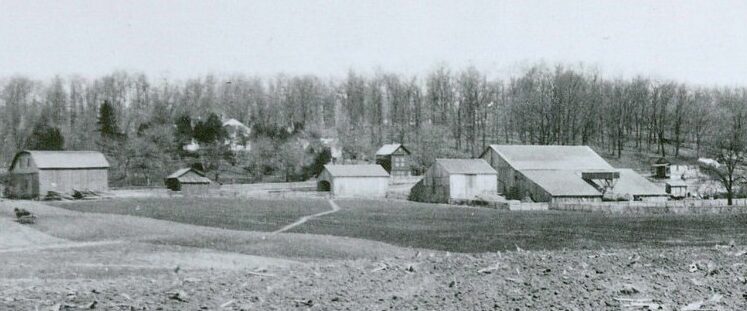
Arvine, instead, would focus on agriculture and would ship his grain across the country on the new Ohio & Erie Canal, completed in 1828. By the 1840s, Arvine Wales had written in many local agricultural journals about the excellent crops at the farm. Spring Hill Farm was passed down to Arvine Chaffee Wales, who succeeded his father, Arvine Wales, following his death in 1854.
Arvine Chaffee continued to grow wheat and managed the Merino flock, which was still around 250. However, by the 1870s, he shifted the farm’s focus again, this time to growing Clawson wheat, and raising Southdown sheep for mutton and Merino sheep for their wool. With these two breeds of sheep, the flock numbered over 2000. In addition, Arvine Chaffee established the Spring Hill Dairy in 1876, as the price of wool had plummeted again, and the price of dairy had recently skyrocketed.
With both Spring Hill Farm and Spring Hill Dairy operating, Spring Hill was by far the most productive it would ever be during this time. Arvine Chaffee also tinkered on the farm and performed experiments, such as testing whether steaming animal feed raised the nutrient levels in their diets, and raising different types of hogs, such as Suffolk hogs, which were new to the area. He would manage the farm until he died in 1882. Following his death, his widow, Eliza, would continue to manage Spring Hill Farm and Spring Hill Dairy until she moved the family away to California in 1890.
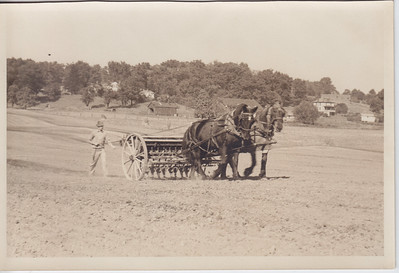
While the family was away, the farm was managed by three families, the Greenwaults, Shoemakers, and Klines, all of whom had previously worked with Arvine Chaffee Wales. Like when the Wales’s managed the farm, these families focused on growing wheat and managing the cattle.
Arvine Chaffee and Eliza’s eldest son, Arvine Wales III, returned to Spring Hill in 1900 following marriage and began operating Spring Hill Farm and Spring Hill Dairy. When his younger brother Horatio returned to Spring Hill in 1907, he turned over management to him. Horatio would be joined by Irene McLain Wales, whom he had married in 1910.
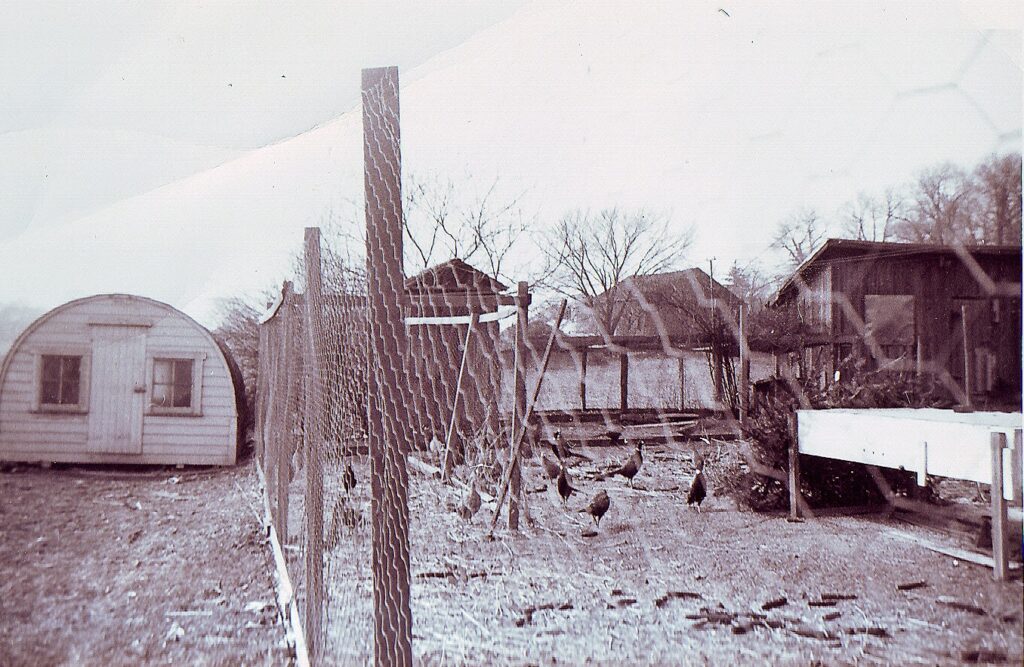
Under Horatio and Irene, Spring Hill Farm focused on raising fowl, such as geese, ducks, and pheasants, while continuing to manage Spring Hill Dairy. By the 1920s, the Merino sheep flock had dwindled to around 10, and by the 1930s, the last were sold.
Instead, he relied on growing grains, such as wheat, and, despite the property being much smaller than before, there were still over 20 farmers working on the property. However, Horatio and Irene began to focus less on farming and instead relied on farmers like the Fox and Hartz families to maintain the farm.
Horatio Wales died in 1952, and Spring Hill continued to operate under Horatio’s nephew, Robert McLain, until 1961, when Irene decided to end farming at the site. With the property’s future uncertain, the Massillon Museum Foundation was formed in 1966 by Irene Wales, who sought to preserve as much of the site as possible. She saved 16 acres, and Spring Hill has been a historic home since her death in 1973.
More information
For more on the Rotch Family click here. For more on the Wales Family click here.
Collections & Archives
To view our archives, collections, and Historic Home photographs, click here.
Outbuildings
Carriage House/Garage
This structure is the second version of this building. The original carriage house appears to have been constructed around 1818, as several documents written by Thomas Rotch at that time reference its construction.
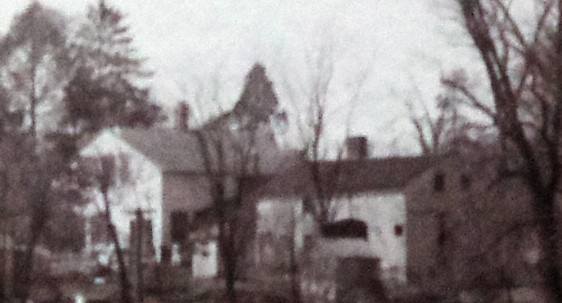
The building was large and had several stalls for horses and carriages. There were also living quarters on the second floor for additional farmhands as well as the groomsman, whose job it was to take care of the horses. In the back of the carriage house was also a small workshop and forge area.
The building was modified multiple times between 1830 and 1907, including the addition of a breezeway connecting to the farmhouse and additional space for horses and carriages, both added in the 1870s by Arvine Chaffee Wales.
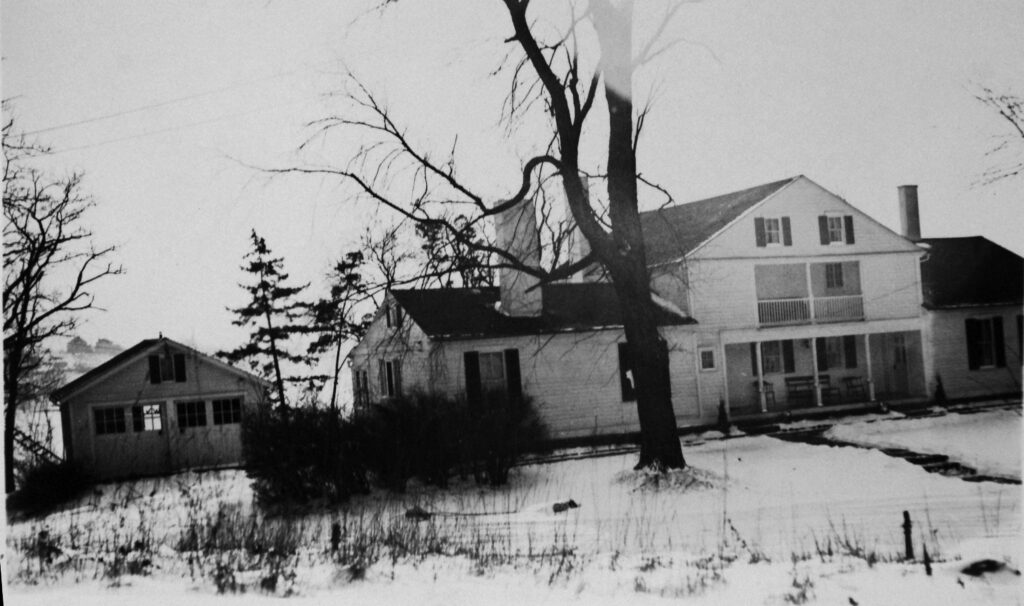
Between 1907 and 1910, the Carriage House was torn down by Arvine Chaffee’s youngest son, Horatio Wales, and replaced with the current garage. Around this time, several carriages were destroyed by farmers under Horatio’s direction and replaced with his vehicles.
Today, there are two carriages in the garage. They are from the Hess family, another local family. While these two carriages are not original to Spring Hill, they do date from around the 1870s.
Smokehouse
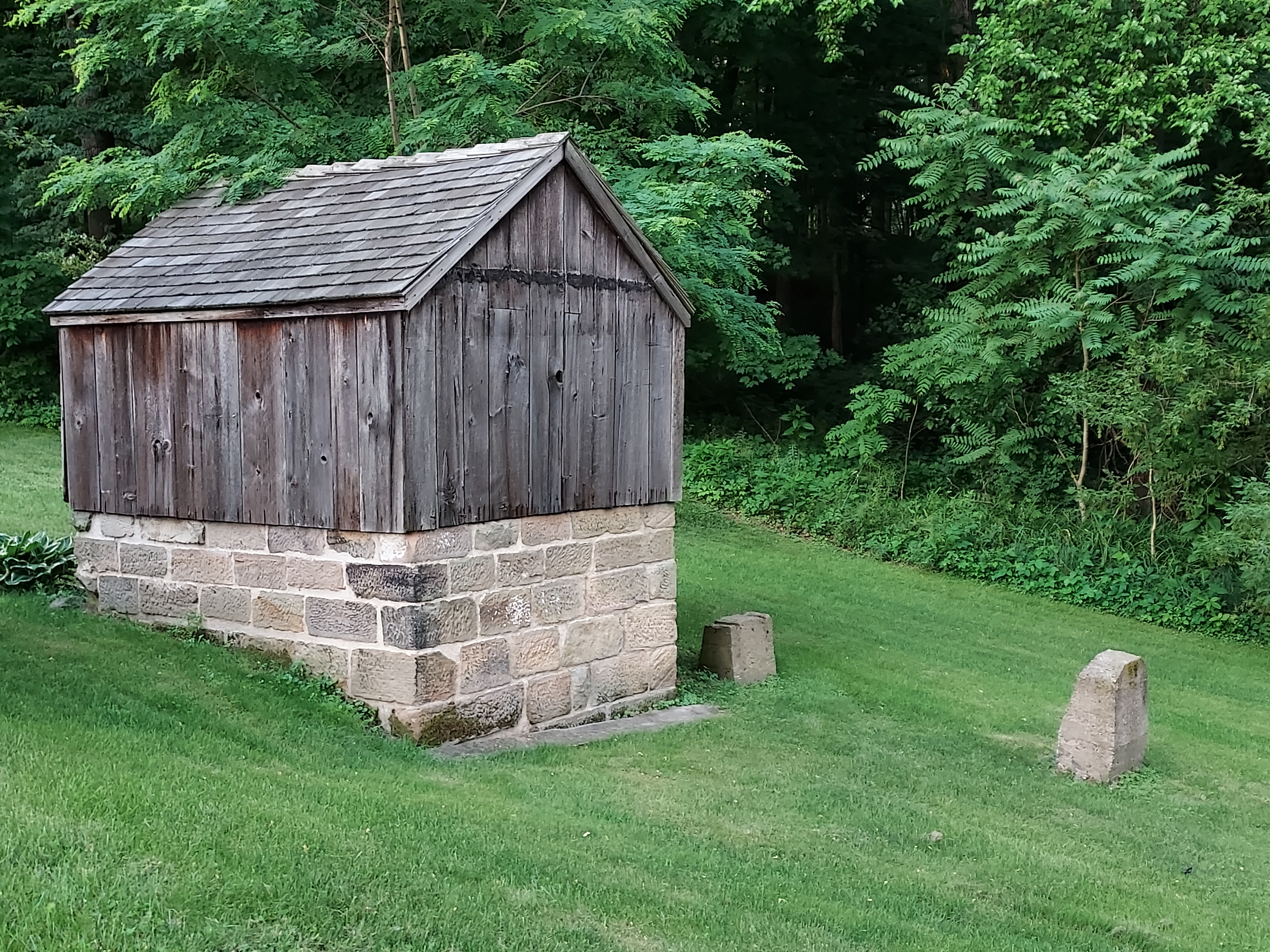
The Smoke House appears to have been constructed around 1818, as several documents written by Thomas Rotch at that time reference its construction. In addition, the foundation stones are very similar to those used in the farmhouse’s construction, which started in 1821.
Smoking was a way of preserving food prior to the advent of refrigeration. After the food, which was often ham, was smoked, it would be taken and hung on hooks on the second story balcony of the farmhouse. This area was also used to preserve other foods such as pumpkins. Domestic staff, who’s workspaces were connected to this balcony, would have quick access to the stored foods.
The Smoke House was used until the 1940s when Horatio and Irene Wales ended the practice of smoking foods at Spring Hill due to Horatio’s poor health.
Dog Kennel
The dog kennel is one of the more modern buildings constructed at Spring Hill, commissioned by Horatio Wales after he moved back to the property in 1907. The location it is in today is not where it was originally built, as it was built further up the hill. Horatio loved to hunt and took care of his dogs. The Dog Kennel even had electricity and running water for the dogs when it was built around 1910.
The structure was moved to its current location in the 1930s. Horatio chose this new spot because it was the former location of the specimen house, built by Arvine Wales in the 1830s to showcase his curiosities. The specimen house was torn down in the 1890s, but the foundation remained, which is why Horatio had the Dog Kennel moved onto it.
Spring House
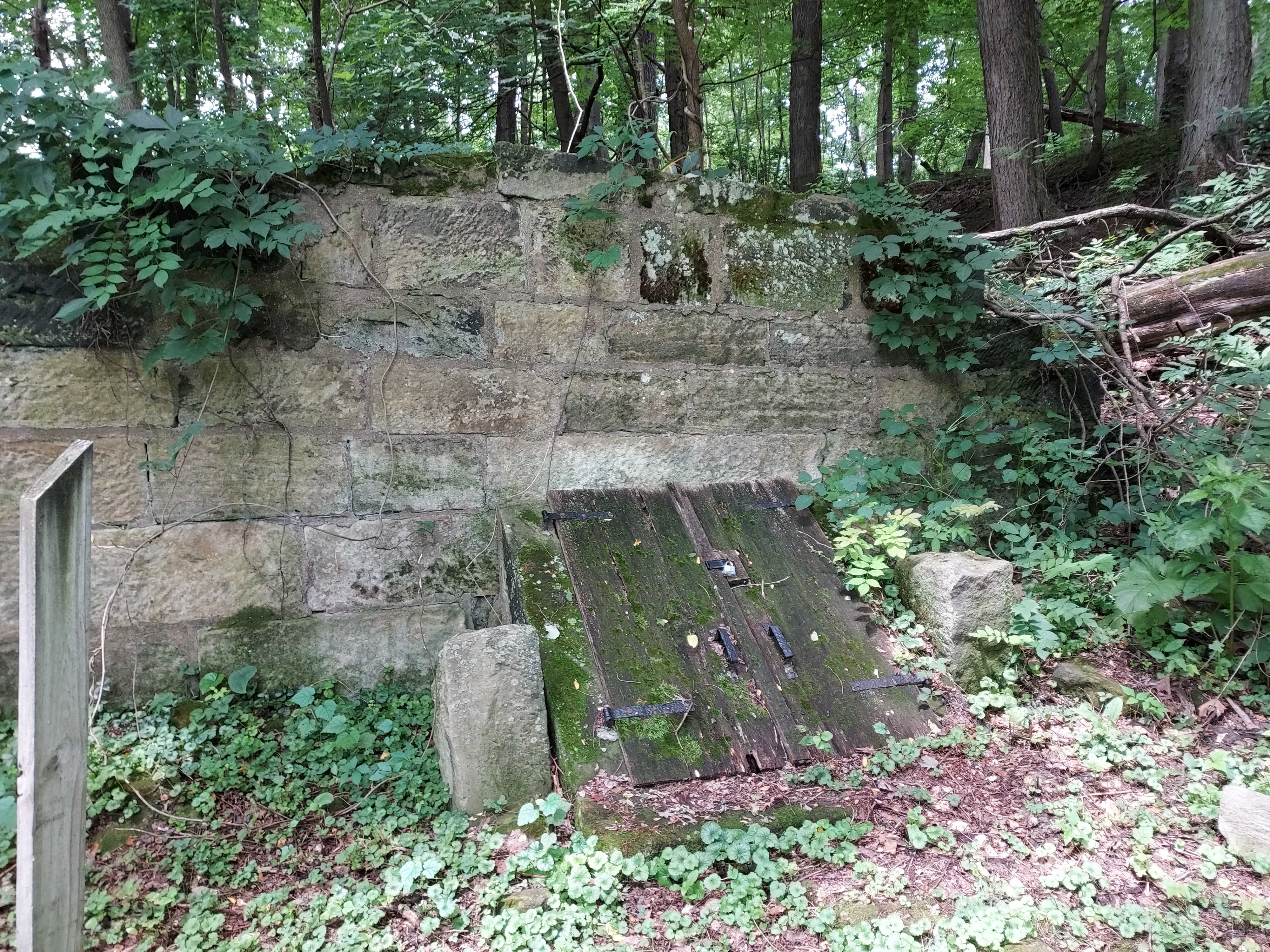
The Spring House appears to have been constructed in 1816, as a work order between Thomas Rotch and Richard Castleman mentions a Spring House to be built on the hillside near the house.
While much of the information regarding the building has been lost over time, according to Rotch records, the Spring House was constructed of white oak and stone and was quite large, being two stories high and 8 feet long. There was also a cellar portion of the building where one of the several springs on the property could be accessed from. In addition to water access, the cellar would have also been a place to store dairy products.
Besides its intended purpose, the Spring House was one location where freedom seekers could have found refuge on the farm in the early days, especially before the main house was finished in 1823.
In addition, according to family records, the Spring House was the first site of the Charity School of Kendal, which was established in 1826, until a dedicated building was constructed in 1844.
During Arvine Chaffee’s lifetime, he had the Spring House modified and enlarged according to his records, although what exactly was done is unknown. He more than likely had either a second story added on or tore down the original Spring House and rebuilt it. However, while the details of the building are unknown, it is known that the Spring House also doubled as a place for farmhands to sleep if there were not enough beds on the property, especially during the harvest or shearing seasons.
In 1903, the structure was adapted again under Arvine III to supply spring water via a French drain pipeline to the Milk House and Milking Parlor, further down the hillside.
It is unknown when the building was torn down, but according to water records Horatio Wales kept after inheriting Spring Hill in 1907, the springs were last used around the 1940s, as they were deemed unsafe by city officials. The building was then likely torn down, as it was no longer referenced. Today, all that remains is the cellar and the ruins of the first floor.
Milk House
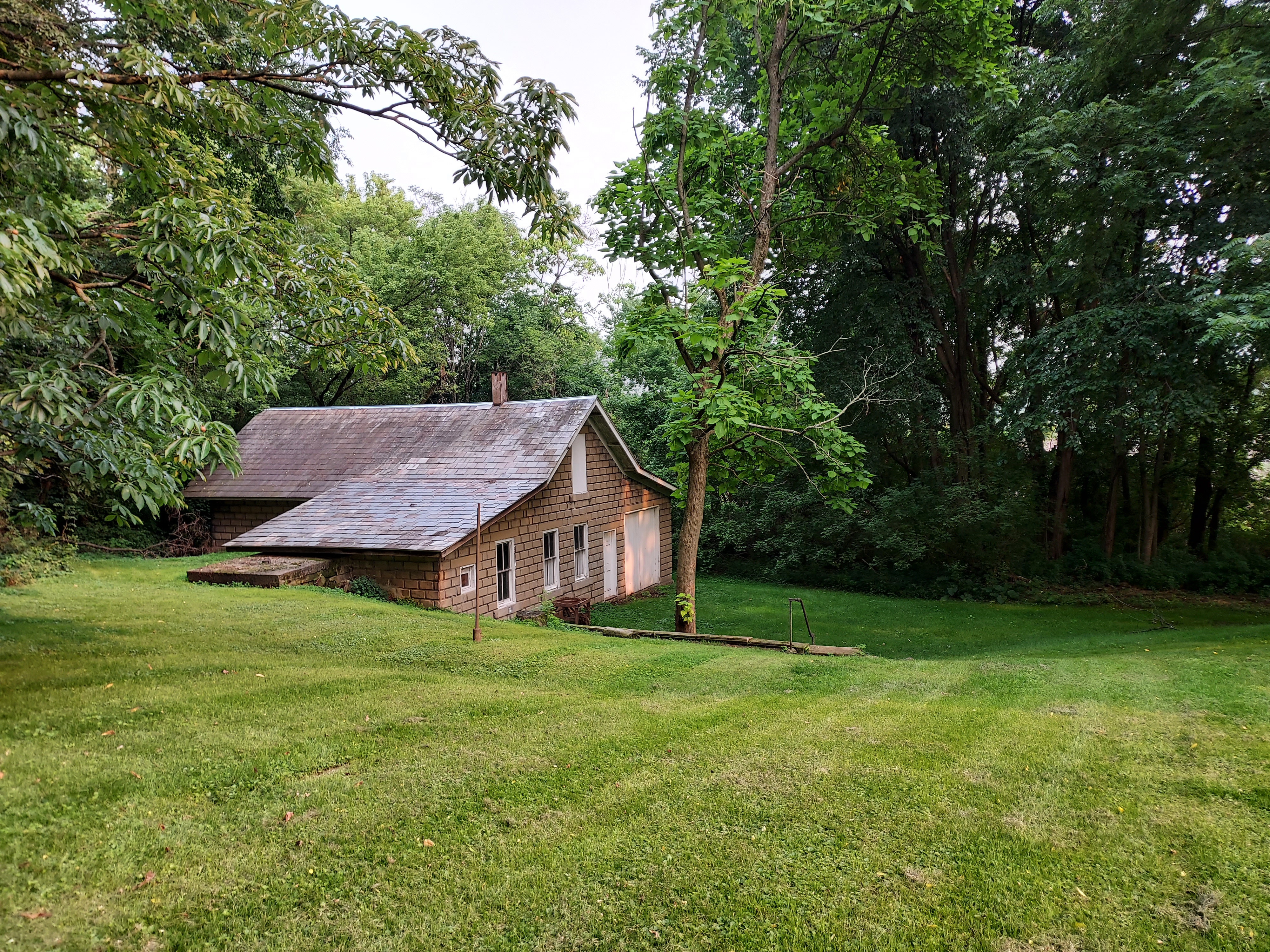
While cattle had always been part of Spring Hill Farm, they were not a major part of the goods sold from the farm for many years.
When Thomas and Charity managed Spring Hill, their main focus was Merino sheep wool. Arvine Wales, who bought Spring Hill after their deaths, also raised Merino sheep but mostly grew crops, such as wheat, which was more profitable.
After Arvine Chaffee Wales, Arvine Wales’s son, inherited Spring Hill in 1854, he continued growing crops and raising sheep. However, his focus was on dairy, which was more profitable than grains or wool. He would purchase many Holstein and Guernsey dairy cattle and establish Spring Hill Dairy in 1878.
According to drawings and maps of the farm, he also had a Milk House built around this time. It is unknown when it was torn down.
When Arvine Wales III moved to Spring Hill in 1900, he had this building, the Milk House, built in 1903. This building was once an essential part of the commercialized farm; it was used to store milk and cream, kept cool by the natural spring water that was directed into a trough from higher up the hill. The building was also constructed of cut stone to act as an insulator, keeping the interior cooler, all of which was very modern for the time.
As shown in the image above, the large garage door to the right of the building provided pull-through access, where horse-drawn carriages would ride through and be loaded with dairy products for delivery to distribution centers.
When Horatio Wales returned to Spring Hill in 1907, he continued to manage Spring Hill Dairy until he died in 1952. His nephew, Robert McLain, would continue to operate Spring Hill Dairy until 1961, when, at Irene McLain Wales’s direction, production ceased at the farm.
Grain Barn
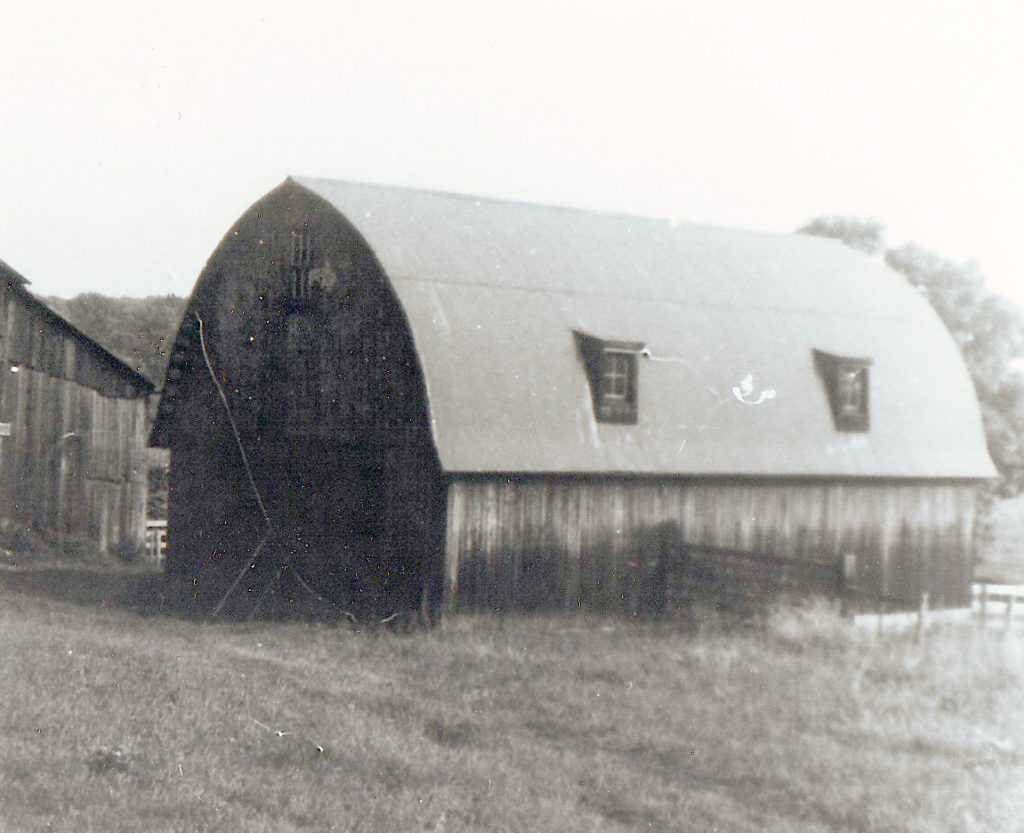
The Granary Barn was constructed in 1953 to replace its predecessor that stood facing the opposite east-west direction nearby. The farm’s primary owner at the time, Horatio Wales, had passed away just shortly before its construction. The farm continued to be operated by Horatio’s nephew, Robert McLain, and tenant farmers like the Fox family, who lived on the property until 1962.
The granary barn was used to store grains to feed the livestock: The interior includes a corn crib on either side for drying out the grain, and a second story grain loft that was emptied using a grain shoot.
The architecture of the barn, with its rib Gothic arch and metal roof, was characteristic of barns from the early 1900s to 1950s due to its higher cubic storage capacity.
Wool house
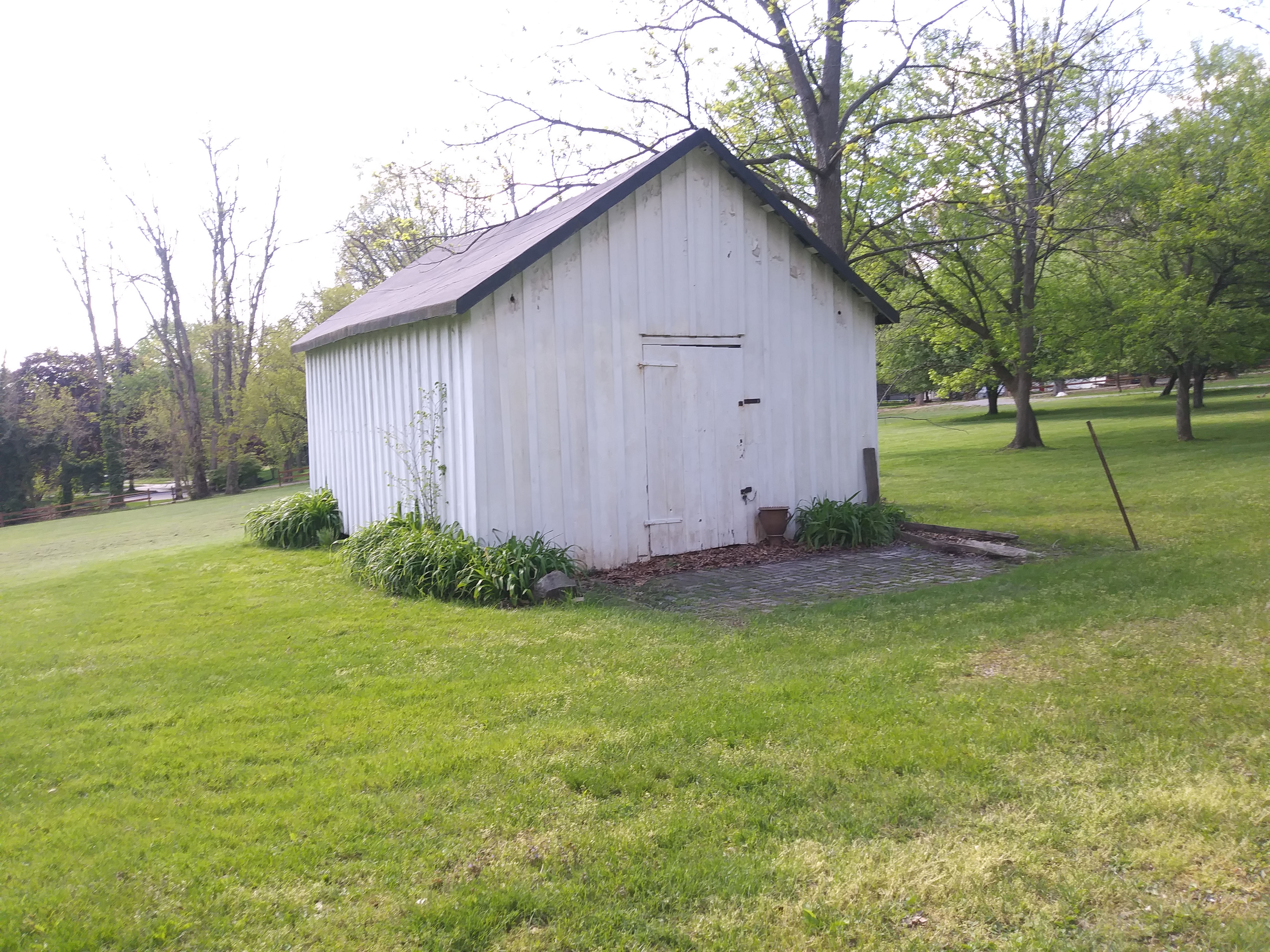
When Thomas and Charity Rotch operated Spring Hill farm, beginning in 1812, they focused on raising Merino sheep, admired for their very fine, soft wool. While the age of the Wool House is unknown, it is very likely built in the 1810s for the purpose of storing wool. The wool would be kept there until it could be transferred to Thomas’ woolen factory along Sippo Creek.
After the farm transitioned away from the wool industry to dairy production in the 1870s under Arvine Chaffee Wales, the Wool House began to be used as storage. Items such as furniture, business ledgers, and important family documents were stored here.
After 1910, when Horatio and Irene Wales lived at Spring Hill, the building continued to be used for storage. In the 1920s, Irene began going through these old boxes and barrels of documents. She discovered not only important business and personal materials from Arvine and Arvine Chaffee Wales, who were generations before, but also Thomas and Charity Rotch. As she continued to comb through these materials, she also discovered the George Duncan letter and that Spring Hill was a station on the Underground Railroad.
House atop the hill
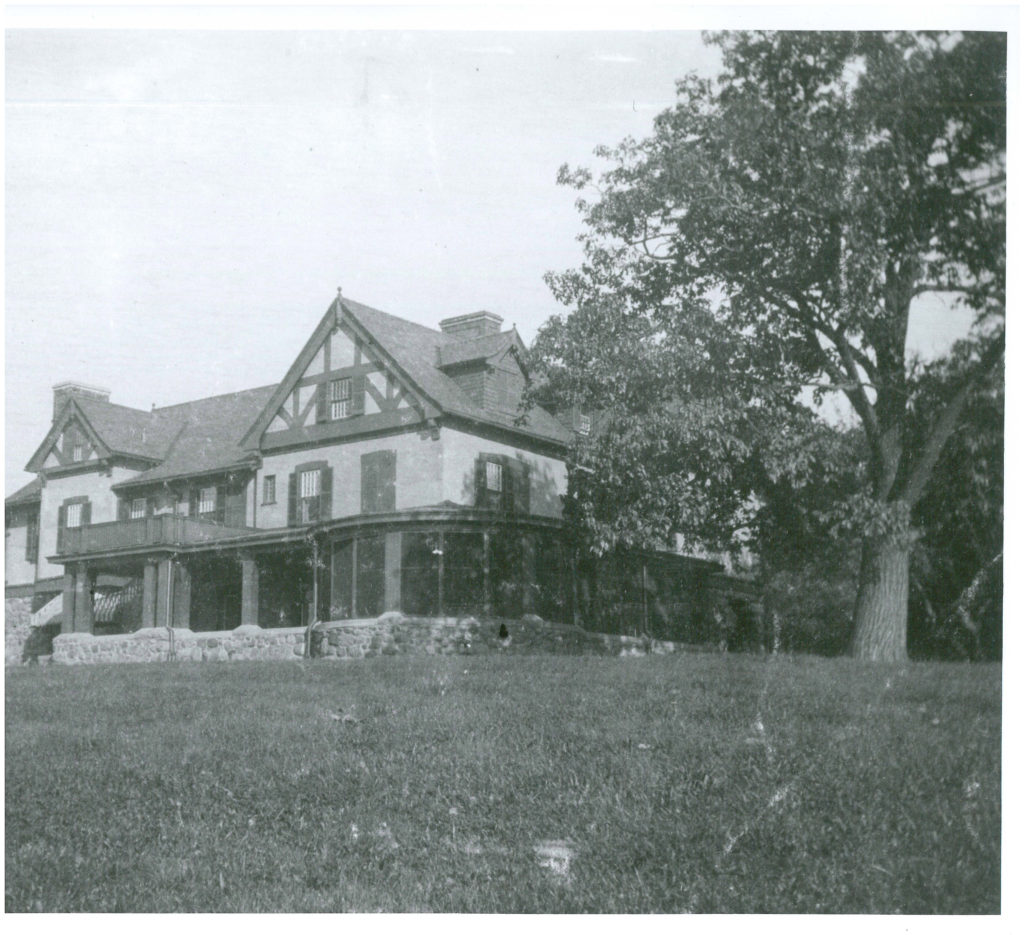
Initially, this was the site of Arvine III and Edna’s McClymonds Wales’ house. His mother, Eliza Wales, moved in with him and would rotate between his house and Helen Wales Skinner’s home in Europe (in France and Germany while Helen’s husband Robert Peet Skinner was US Consul General) until Eliza’s death in 1914.
The tower that some neighbors remember was a water storage tower. In 1923, that home burned to the ground. Irene Wales lost some of her silver she had stored there while on vacation. After the fire, Arvine III and his wife Edna moved to New York where their children were attending school. Their daughter, Elizabeth, built the current house.